A Review of DIE RPG
This review is a submission to the Quinns Quest Review Jam, a community jam about reviewing roleplaying games for September 2026.
Intro
This summer, my group's schedule was awful. Everyone was on vacation on different dates, and it was impossible to start up a stable campaign. So, I ran one shots and two shots. Both as a way to diversify and try new games, and to find the one that would spark the desire for a campaign into the group.
The winner of that gauntlet is, DIE RPG.
At time of writing, we only finished the Session 0 of the campaign, and as excited as I am, this review is going to focus on my experience running it as a Two-Shot prior to the current game, and initial thoughts on the system.
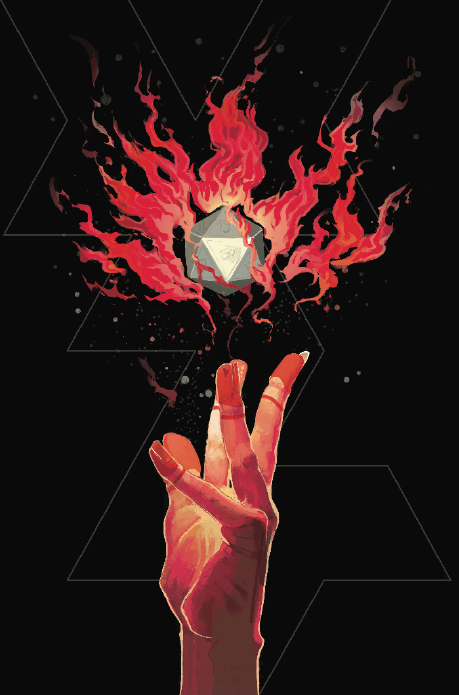
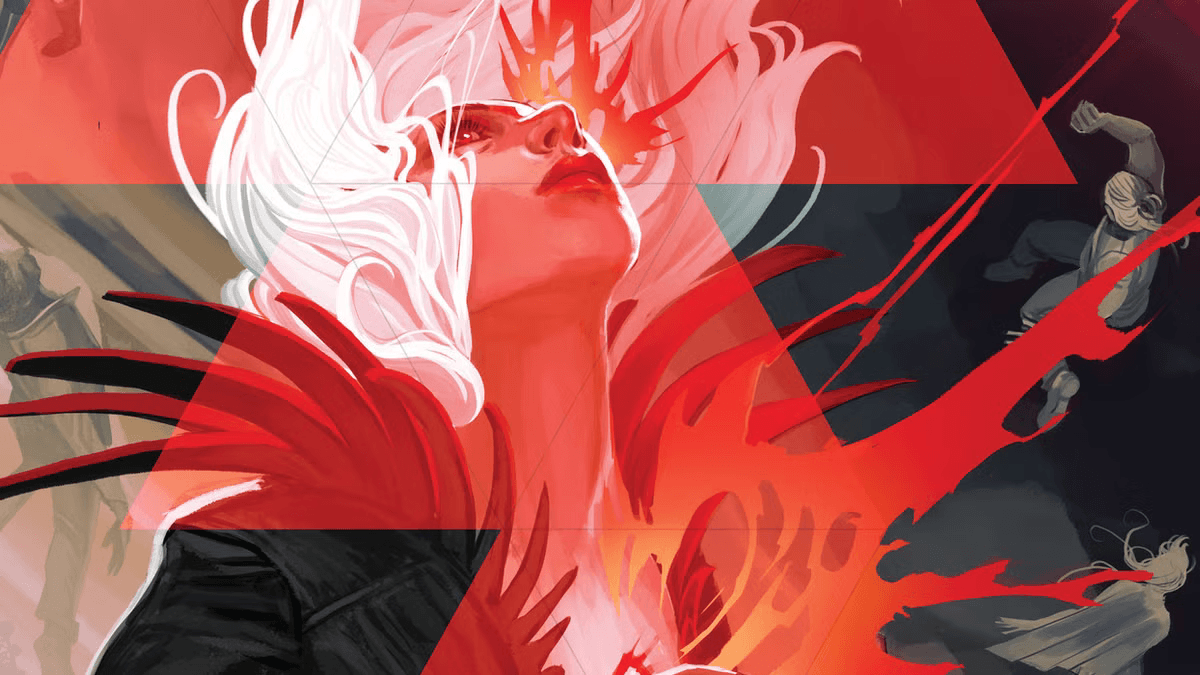
That recurring motif on the arts' backgrounds is the template to a d20, one of the many nods to TTRPGs from the game.
What is DIE?
The first time I heard about DIE RPG was in passing on Discord. It didn't seem for me and I ignored it. The cover did look good. A few weeks later I spot the game at my local bookstore. I skim the book for a few minutes. I'm struck by a clean layout and introduction that tells me exactly what the game is. And the realization that what the game is a TTRPG I was desperately looking for.
I rushed through the great and free Quickstart1, then bought the full book. I also learned that DIE is both a TTRPG and a comic2, written by Kieron Gillen, the corebook co-written by Grant Howitt of 'Heart: The City Beneath' fame, and both illustrated by the talented Stephanie Hans, whose art populates this review. It is, impressively enough, not an adaptation, as they were both written conjointly. DIE, the game, is not meant to retell or live the story of the comic, but an engine to tell similar stories that are your own. Neither the game or comic feels like a lesser version of the other, a rare accomplishment.
DIE RPG is about a group of flawed adults that used to play TTRPGs together when they were teens. Their grown-up life didn't turn out so great, and they became bitter and unfulfilled. They play one last game at the school reunion for old time's sake. They get absorbed and trapped into the game world of their teenage years, but deeply twisted by their personal traumas and demons: The orcs have the faces and voices of your bullies, the elf queen is the crush you never really over and the greedy dragon is your office's boss.
This world is DIE. It gives its visitors both what they desire and lack the most in the real world, and a tormenting reflection of their own fears. All it takes to go back home is to answer a single question:
"Do you really want to leave?"
The decision must be unanimous.
the
dead
don't
vote.
What's so exciting about DIE?
DIE knows what it is about
DIE RPG is the Silent Hill TTRPG I wish there was. I have started my horror genre awakening recently, as I discovered despite not liking gore, I'm really into personal psychological horror, where all the scary things are metaphors and pretexts to explore the characters' past and traumas. The Haunting of Hill House3 or Silent Hill are great examples. Since playing Silent Hill, I have been looking actively for a TTRPG that could do horror deeply tied to the PCs personal lives without requiring prewritten characters, story or bestiary. DIE RPG, despite being very different in theme, tone and genre, featuring powerful characters in a fantasy world filled of TTRPG meta-subtext, still hits all the checkmarks I was looking for. This is a game solely dedicated to make the PCs confront their inner selves and each other, through the lens of a distorted world that's built through play.
This clear identity is communicated by a spotless layout and editing. The one page introduction tells you everything you need to know heading into the book. Every chapter starts with a short summary of its content, the chapter covering the first session even starts by a bullet point list of the procedures you can use as reference! Reading the corebook, I never felt like I had to force myself through an extra dozen pages to get the point it was trying to make. The layout of the pages breathes, they are pleasing to read, and features stand out art.
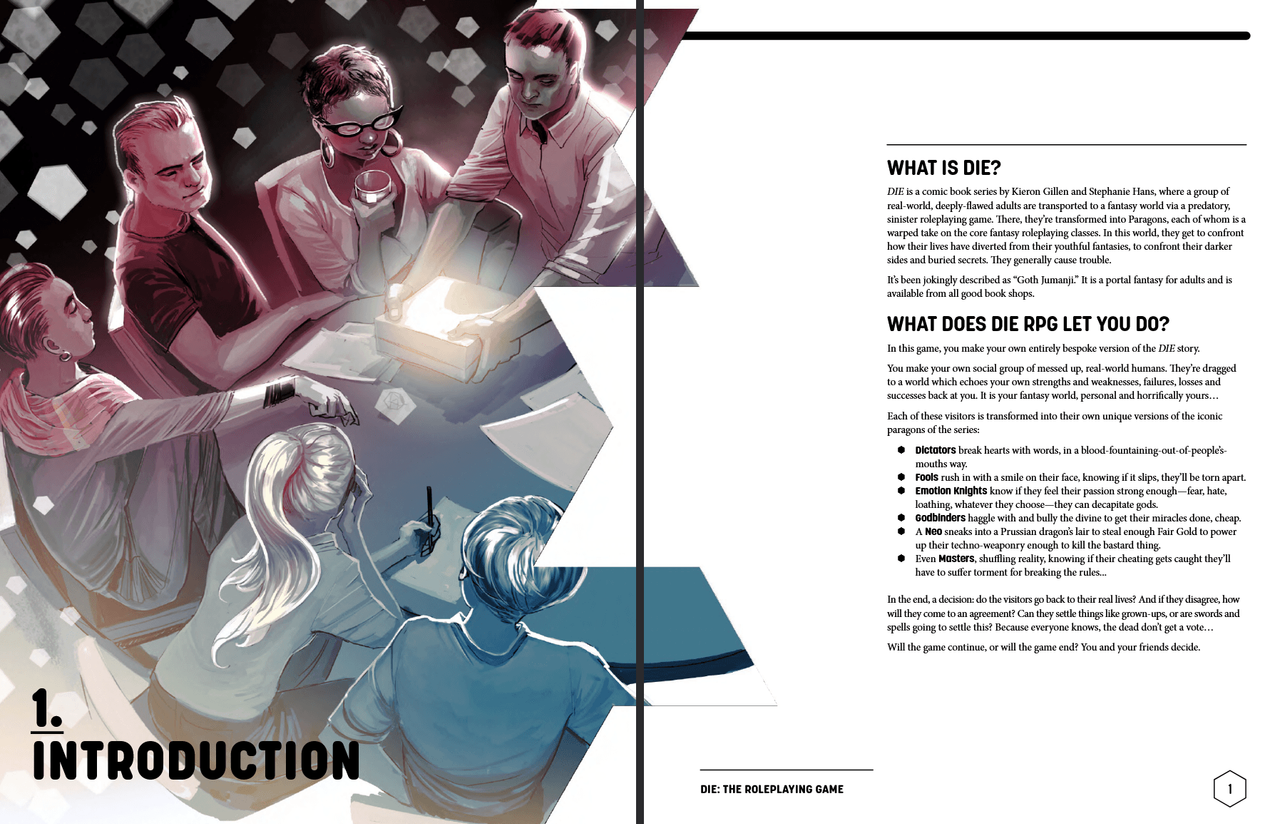
An introduction so good, I have to feature it zoomed-out to not render my own's moot.
It's an Isekai that cares. Isekai4 is a story genre popular in mangas, about modern day characters reincarnated into a gamified fantasy world where they get to be the Hero. It's mostly escapist fantasy, and rarely engages with the implications of its own premise. Do they miss their old life? Do they want to go back? The trope is a vicious pitfall when brought to a TTRPG, as it becomes a free-pass to create cynical characters that don't care about the world around them. They know it's just a game to be exploited, after all.
But DIE cares. DIE cares so much, that the game literally ends when you decide whether or not to go back. It's the central question fueling the entire game. Your character doesn't even need to care, DIE lets you lean into it through Paragons like the Fool, because it has the means to force you to care. Can you stay indifferent to the faces of your past everywhere you go? To monsters born from your own guilt? To your own friends wanting so badly to return home? DIE makes the tension between living in an idealized yet fake life and going back to the real world the entire point of the game.
DIE gives you fun toys
It has fun and weird classes. The classes, named Paragons, are all mechanically unique and refreshing, most of them a cynical take on classic D&D classes. The Dictator's voice urges orders that cannot be refused, to the horror of their victim and every bystanders, because isn't that what a skilled bard actually does? The Neo is a rogue who needs a currency that disappears every dawn to enable their abilities, and has to constantly think about stealing again. The Godbinder is a cleric that needs to constantly negotiate and trade favors with Gods to perform their Miracles. The Emotion Knight is a fighter powered by their own sacred emotion, may it be anger or grief. The Fool is the disruptive player, supplied by supernatural luck whenever they act selfish and reckless. The Master is a GM-only class that can cheat.
Yes, the GM has a character! Somebody had to GM this teenage group of friends, and that character often serves the role of the Antagonist, the one who dragged everyone in DIE to fulfill their own fantasy. They do have a lighter character sheet, as they are expected to quickly scutter off and become a long term goal for the rest of the group: Find their friend and find out what's actually happening. Meeting the Antagonist is often the final climax of an adventure.
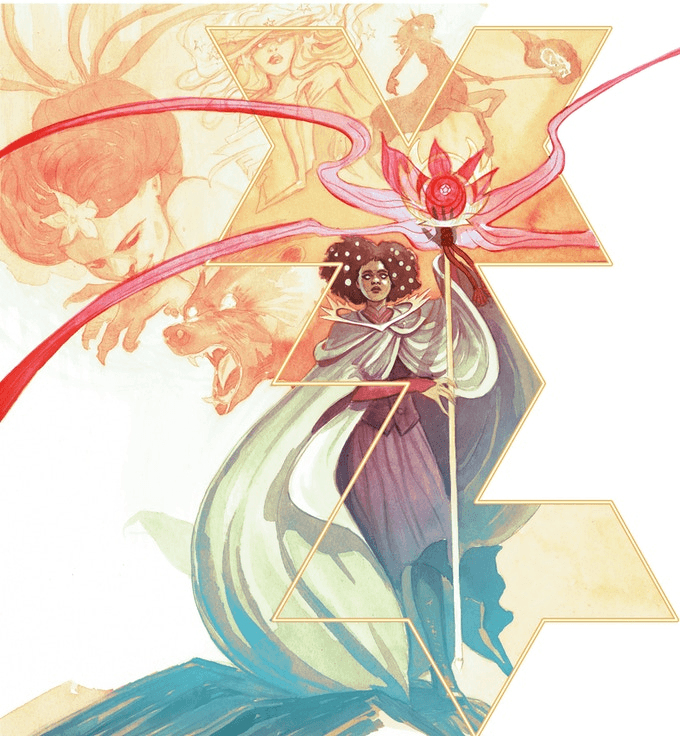
The Godbinder, one of the five player Paragons.
The game has very little lore. One of my TTRPG pet peeves is that I despise lore. I don't want to read lore. Give me the minimum viable information I need to play your game without reading your novel. DIE knows this, and I suspect Kieron also knows he is an established enough writer to not have to sneak micro-fiction into his corebook to prove anything to you. DIE, instead of giving you a world, gives you the tools to build your own, through the shared backstories of the group. Make the Antagonist's lair the venue the PCs never managed to perform in. Its bouncer the teacher that never believed in your potential. Its starred band your old rivals. It has few elements that are consistent between DIE games, and part of an actual lore, such as the Fair and their prophetic revelations, the ever disposable Fallen as enemies or the answer to what is DIE. But none of those warps the entire game around them or are overwhelming to introduce or learn about. They are another tool in your box, and can make for interesting twists.
DIE supports the GM
The book is a buffet that keeps on giving. It's a game that over-delivers time and time again. The game is explicitly designed for short adventures of about 4-6 sessions. But what if you want to play a long campaign? Here's a hundred pages on how to run a campaign with an exciting skill tree for every single Paragon. What if a player wants to play the GM-only class, the Master? Here's a player version in the appendixes. There's three different versions of each character sheet depending on the length of your game. There's multiple scenarios that offer semi-prewritten adventures, with a scoped length, context, and provided locations and bestiary.
This exhaustiveness extends to GM advice and tools. Creating a world revolving around the PCs backstories and traumas is daunting! DIE knows it, and it guides you. A bestiary of monsters and how they can be twisted to echo the PCs' inner conflicts. How to identify the core lacks of a character and turn them into encounters to confront themselves. How to keep asking questions about their Persona's life throughout play, and keep weaving the answers into the game. The appendices even have an example of Second Session prep! I need this in other games! I mentioned second session, because building the game around the PCs is so central to DIE, that you cannot even prep anything before character creation is finished.
That first session is an amazing guided character creation exercise. Rituals, as named by the game, is a guided step-by-step session zero. It features introduction spiels, safety tools, a list of questions to identify which kind of friend group the PCs were, their relationships, their grievances, how their lives turned not so great into adulthood and hooks for what they lack the most right now.
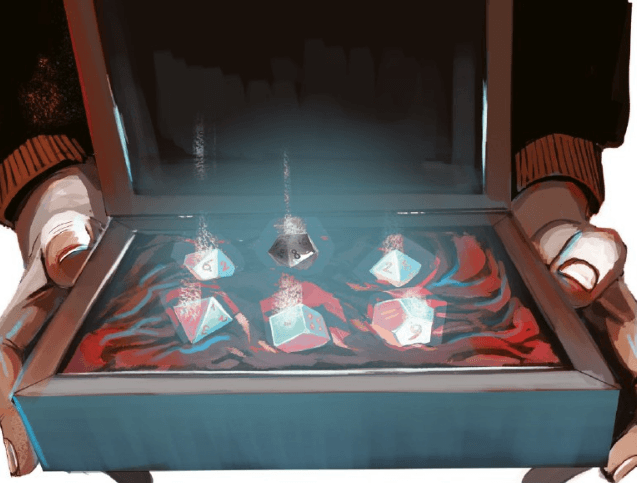
Once the table defined their "Personas", the real life people that will get sucked into the world of DIE, Rituals makes several interesting choices to enforce its mood. Everyone leaves the table, and comes back pretending to be the Personas meeting each other for the first time in years, essentially larping for the rest of character creation. They get their classes, the Paragons, assigned by the GM Persona, fill their sheet while in character, get solemnly handed out their die each, and this phase ends with a literal ritual absorbing the players into DIE, beginning play and resuming third person roleplaying.
You might have noticed the players don't choose their Paragons. The GM assigns them, to pair a Persona with the one that fits the most the kind of story they might tell, taking player preferences into account. I do think this part is fun, and my players have enjoyed the dopamine rush of gambling their classes, though I'm not completely sure how necessary it actually is, as most Paragons are more closely tied to a playstyle than a narrative arc.
I love the direction and guidance from the Rituals, and more games could benefit from a first session that tightly designed.

Playing the Game
I ran the game as a two-shot, following the classic and recommended way to experience the game for the first time, using Rituals. One session of guided character creation, followed by one to three sessions of play. In our case, play was a singular one shot.
Rituals went like a breeze. It ran much longer than I thought, as we got about 4 hours of lineage out of answering the group questionnaire, exploring the answers and their relationships. I chose to not reveal any Paragons ahead at all, and let the players be surprised by the uniqueness of each class. It went great. The LARP was a bit more hesitant, as not everyone was fully comfortable embodying a character, but we got through without much itch.
The Personas were all part of a preparatory music high school together. None of them became successful musicians, and most of them turned away from music. The Master was an elitist snob that didn't live up to his own ambitions after graduating, and remained in the shadow of his famous musician wife. He summoned everyone to DIE in order to live out the musical success he never had in real life.
This first session left everyone, including me, deeply excited for the follow-up.
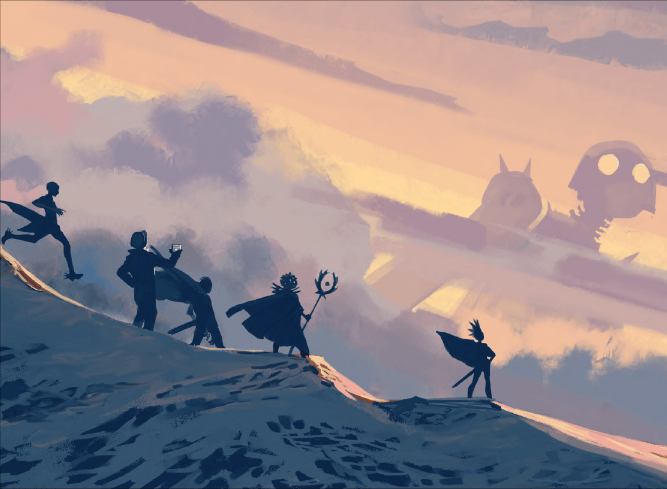
Prepping the second session was the single most stressful prep of my life. By the time we started playing the second session two weeks later, I hadn't even fully finished my prep, and had to disclaim to my players that we might have a rough start and I will need suggestions and support from them.
What went wrong?
Cramming the entire play into a one shot sized adventure is a tall order. I had to create encounters to resolve the lack of each PCs, but didn't have the luxury of pacing them over multiple sessions to focus on the ones I was confident about and let new hooks emerge from play for the others. On top of that, I had to intertwine them enough to be able to cover the four players in a single session.
For example, the structure I landed on was that the PCs would have to roam a city where classical music is law and other musical genres are banished, to find tickets for the Master's grand performance, each tied to their lacks. This proved simple and straightforward enough for a one shot.
I did know very early that the Fool, who lost the ability to play her cello to a muscular disease, will find a jazz bar with her mentor and the opportunity to play again. I did know there would be a Baba Yaga mini-boss, the personification of their feared school supervisor of the same nickname, whose inside are an idealized version of the Dictator's family and home. It wasn't clear how one would lead to another. And I did not know how to fulfill the Neo's need to explore the world without making them leave the city or being split from the group doing stuff in a remote observatory.
When play started, I disclosed to the table that I did not know how to solve the Neo's encounter, and because of the lack of clear connections, I struggled at the start to steer them toward interesting events. Talking with the Neo player, we landed on letting him analyze the world around him to fulfill his lack, and finished with a short run to the observatory prepped earlier.
The problem above has solutions, but it befalls on the GM to get the inspiration to build those encounters, incorporate them into the world, and connect them to each other through a purposeful level design. It feels like a lot, but the game also explicitly warns against over-prepping, the second session prep example actually lists its necessary encounters as 4 bullet points and nothing else, which felt uncomfortably light to me.
That classical music theme also proved itself treacherous. The game asks the players to pick obsessions for their characters we, players, are familiar with. Those obsessions are the fertile ground to build the world and its location from. I know very little about music! Some of my players did, but they weren't there to prep with me. It might have made it harder for me to come up with ideas.
The game went forth. That ticket fetch quests ended with meeting the Fair, powerful beings that can answer any question about the future with a prophetic answer.. determined by a coin flip. The players did not know this, and asked the worst question of all:
They asked if they will ever go home.
They learned this was not among the things that happens.
This marked the beginning of the single best finale I had in a TTRPG, as the entire table was aware that this game could not end in anything else than tragedy.
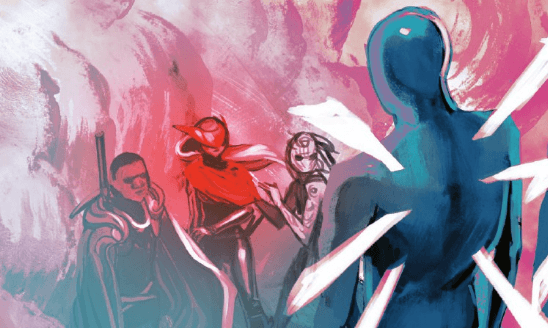
They met the Master at his concert, giving the exhilarating performance5 he could never perform in real life next to the crashing waves of the ocean. The PCs interrupt him, confront his anger and theirs, give emotional speeches, they fight. He gets defeated. He gets forced to perform the ritual to leave DIE with them.
In the middle of holding hands with my real life players to cast the magical word, he spent his last cheat to split the group across continents, making the completion of the ritual impossible and dooming the world to be destroyed. A last minute reversal leading to a desperate scramble.
Left behind was Calypso, the Dictator, the only character that really wanted to leave, and the one that the other players were agreeing with out of compassion, and the Godbinder. As a cost for the cruel God of Sea to bring the party together again, Calypso offered herself to the ocean6. The party completed the ritual, and elected to remain on DIE.
This was a cathartic and deeply satisfying finale. The emotional speeches and arguing, the sudden reversal and call to desperate measures, the sacrifice answering tragedy. All heightened by a prophecy that put the entire table in a mood allowing it to happen.
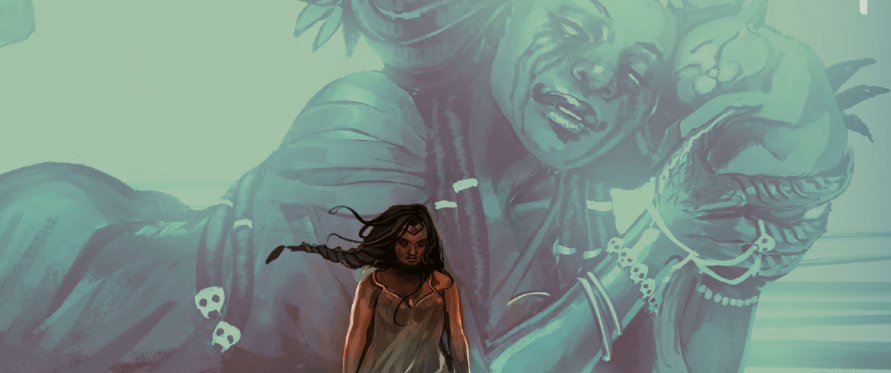
Despite the agonizing struggle of prepping that game, it still managed to over-deliver again, and granted its fantasy. It ended on such a high note that it left everyone yearning for more, and put DIE ahead of the other half-a-dozen great TTRPGs we tried for the choices of a full campaign. My group didn't even want me to spoil them on whether there is a way to bring back their lost friend, treasuring the mystery for a next time.
Am I a bad GM?
I am, to this day, still reflecting on how the prep of this game went. And why it was so difficult.
I am a notorious hater of traditional TTRPGs. I got burnout on them once as a player7, squandered between the crunchy rules, lore as homework and linear plotlines. I swore away from their expectations, and the burden they put on the shoulder of GM to head a story with little guidance. It kept me away from the very idea of GMing for a while. Nowadays, I specifically seek games that lower prep and facilitate running the game as much as possible.
DIE does provide tools to create a story revolving around the Personas and personal turmoil. But it still expects the GM to bear the weight of writing those encounters, shaping up a world, and even an inch of an overarching plotline. I still believe that DIE does a fantastic job at alleviating that work, there's advice to spread out that worldbuilding across sessions, build a palette of inspiration, shape up details during play by asking questions to the players, it gives much more guidance than your standard trad game would, with a clear framework to operate within. I am convinced that if you are a seasoned GM used to dealing with many less welcoming games, you'll have a wonderful time. But that work is still there. Despite the game's advice of not over-prepping, I cannot see how I could run a successful session with only bullet points for encounters, and not an idea on how they connect in the fiction. I am half considering looking up prep guides for trad games, running back to what I dislike the most.
This whole ordeal actually made me reconsider my abilities as a GM. The game does feature extensive GM advice, and when voicing my struggles on the community discord I didn't find much people relating to them8. How much of that struggle was the game's failing, or my own? Is there something fundamentally wrong in the way I approach and prep games? Am I overthinking my sessions, misfocusing my efforts, demanding too much handholding? I am getting lost in the weeds spending 4 hours creating Personas? Is my criticism unfair to the game and fed by lack of experience, or a valid blind spot of the game? I do not know.
Our previous campaign was with Slugblaster, a Forged in the Dark game that features a toolbox of locations, factions and obstacles to mingle with. I did spend some fair amount of time prepping for it, but I could feel the good bones of the system, and how faster, leaner and slimmer that prep could get with experience.
I do not feel this way for DIE, though it might be arguably too early to tell, as I am prepping for the second session of our campaign. It is easier. But not so considerably easier. I still find friction. Difficulty to frame a clear goal for the players. Clear obstacles. Getting inspiration for encounters relating to themselves or the Antagonist. I suspect the second session might simply be the hardest to prep for. I hope to be right. It is slightly ironic, that I am taking time away time from prepping the game in order to write this review in time for the community jam.
Conclusion
I have a hard time reconciling my love for the game and the difficulty I had prepping it. It's making DIE a polarizing experience for me, something both exciting and dreadful to anticipate.
And yet, I do recommend DIE wholeheartedly, I think it's an amazing game. It does something very unique, very purposefully, and feels like nothing else out there. If you want to play a game dead set on PCs confronting their inner demons, figuratively and literally, DIE is well worth your time. Check out that Quickstart, really.
I hope to be able to revisit my feelings in a follow-up review once this campaign is over, months from now.
Until then,
The game continues.
Footnotes
The quickstart shares many qualities of the book, and still manages to be both a great preview of the game and playable.↩
I read through the comic, and follow its ongoing sequel, DIE: Loaded, they are great, exemplify what a DIE campaign could be like, and are a trek through the history of TTRPGs. I'm particularly enthralled by their amazing cover arts.↩
The Haunting of Hill House has become one of my favorite shows, and the one that made me reconsider my opinion on horror. It's actually a tense drama masquerading as horror, watchable by even scaredy-cats like me.↩
Despite being closely associated with modern mangas, Isekai actually belongs to the much larger and older genre of Portal Fantasy.↩
I'm big on playlists as mood setters for my TTRPG sessions, and spent some decent time trying to find a classical music violin-piano piece both incredibly difficult to play and emotionally intense as a set piece.↩
A character named Calypso returning to the ocean was very thematically satisfying, and surprisingly, completely a coincidence.↩
My play history of traditional games is, in chronological order, Warhammer Fantasy, Deathwatch, and Vampire: the Masquerade 20th edition. Our GM was great and remains a close friend, and this VtM campaign was the best one I had a chance to run in, but the experience has forever informed what my TTRPG preferences are.↩
But I did find help. They are great folks.↩